
Porsche PSM Failure: A Mechanic's Guide to This Common Nightmare
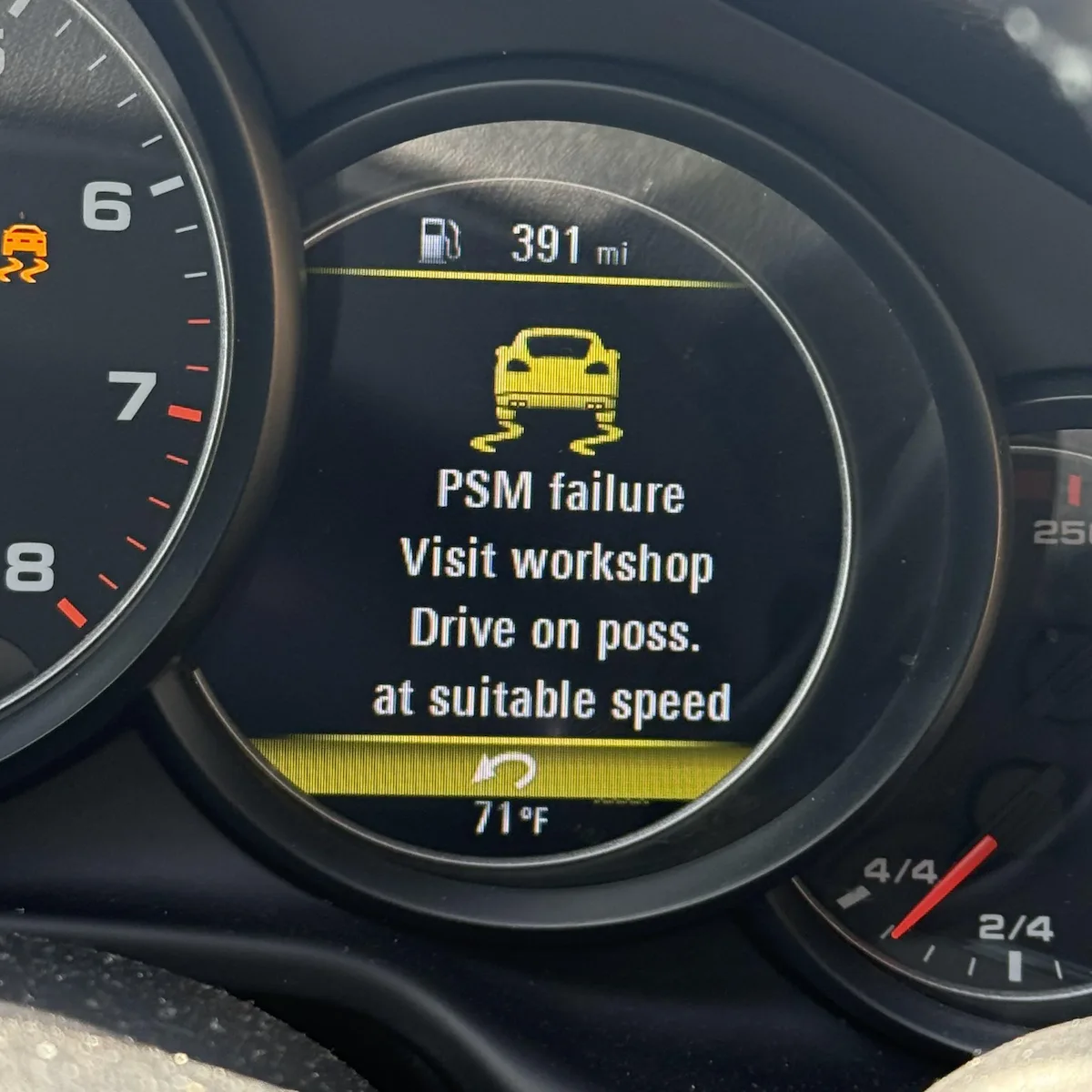
Table Of Contents
- What Does PSM Failure Mean in Porsche?
- What Does PSM Mean on a Porsche?
- What Does the PSM Warning Light Mean?
- How to Tell If Your PSM Is Having Issues
- Common Causes For Porsche PSM Failure
- Diagnosing Porsche PSM Problems: Why You (Probably) Can't DIY This One
- Schedule Porsche service
- PSM Reliability by Porsche Model
- How to Prevent Porsche PSM Failures
- The Bottom Line on PSM Failures
What Does PSM Failure Mean in Porsche?
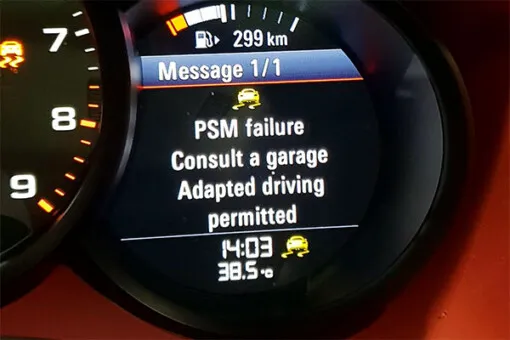
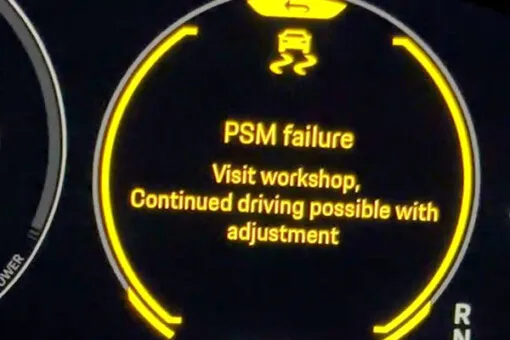
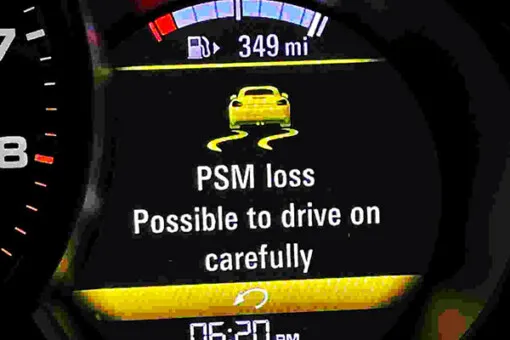
PSM failure in a Porsche indicates that the Porsche Stability Management system has malfunctioned and can no longer provide electronic stability control. When this happens, warning lights will appear on your dashboard, your car may enter "limp mode" with reduced power, you'll lose ABS functionality, and the stability control that prevents sliding will no longer work. This is typically caused by sensor failures, ABS pump issues, or wiring problems.
What Does PSM Mean on a Porsche?
PSM stands for Porsche Stability Management, which is Porsche's sophisticated electronic stability control system. Introduced back in the early 2000s, it's designed to help keep your car from spinning out or losing control during aggressive driving or emergency maneuvers.
The system uses multiple sensors to monitor:
- Steering angle (what your hands are doing)
- Wheel speed (how fast each wheel is turning)
- Yaw rate (how quickly the car is rotating)
- Lateral acceleration (how hard you're cornering)
- Brake pressure (how hard you're stopping)
When the PSM computer detects that the car is starting to slide or lose traction, it automatically intervenes by applying individual brakes and/or reducing engine power to help keep you pointed in the right direction. It's genuinely impressive technology that has absolutely saved many Porsche owners from expensive encounters with guardrails or ditches.
Nevertheless, here's the thing with complex systems: more complexity = more potential failure points. And man, does PSM like to fail.
What Does the PSM Warning Light Mean?
The PSM warning light on your Porsche's dashboard indicates that the stability management system has detected a malfunction. This warning is typically accompanied by an ABS warning light and means your car's stability control features are disabled. While your standard brakes will still function, you'll lose the safety benefits of ABS and stability control, which significantly increases risk during emergency maneuvers or in slippery conditions.
How to Tell If Your PSM Is Having Issues
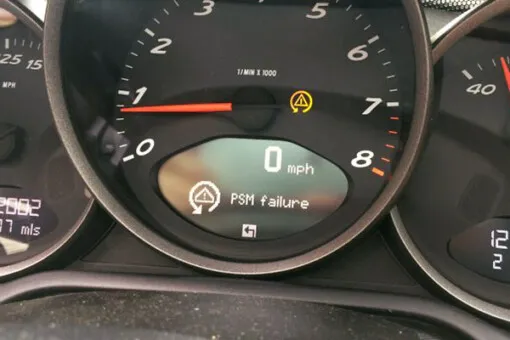
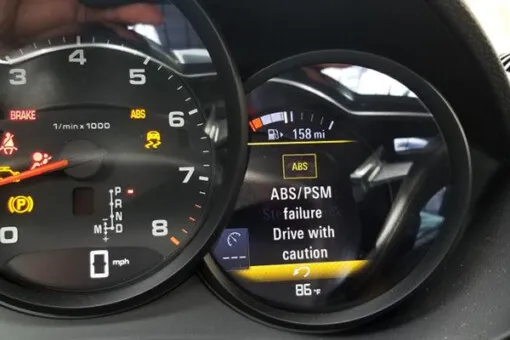
The most obvious sign of PSM failure is, naturally, the warning light on your dash. You'll typically see a yellow or red "PSM OFF" or "PSM FAILURE" message, often accompanied by an ABS warning light. But there are other symptoms that might show up before the warning lights:
Early Warning Signs of PSM Failure
- Brake pedal pulsation even during normal braking (not to be confused with normal ABS activation)
- Unusual noises from the brake actuator (sort of a buzz/hum from under the driver's side dash)
- Traction control randomly activating on dry pavement when you're just driving normally
- Occasional warning lights that come on and then disappear after you restart the car
Porsche PSM Failure Symptoms
- Permanent warning lights for PSM, ABS, sometimes even Airbag
- Car goes into "limp mode" with reduced power
- Loss of ABS function (your brakes will still work, but can lock up under hard braking)
- Stability control no longer works (the car won't help you if you start to slide)
The scariest part? Sometimes this all happens at once while you're driving. One minute everything's fine, the next your dash lights up like a Christmas tree and your 911 feels like it suddenly lost half its horsepower.
Common Causes For Porsche PSM Failure
After digging into hundreds of PSM failures, I've seen patterns emerge across different Porsche models.
Here are the most common causes, roughly in order of frequency:
Wheel Speed Sensor Failures (35% of cases)
These little sensors monitor how fast each wheel is turning, and they're crucial for both ABS and PSM. They fail ALL THE TIME. Seriously. Sometimes they fail because of physical damage, sometimes because of wiring issues, and sometimes they just get dirty or corroded. They're particularly prone to failure on older Cayennes and Panameras.
A customer a few weeks back, had to tow in his 2008 Cayenne with a complete PSM shutdown. Turns out the previous owner had taken it off-road (why???), and the one wheel sensor was packed with mud. After cleaning and replacement, he was back on the road. This kind of issue can be quickly identified with our diagnostic check service.
ABS Pump/Motor Failure (25% of cases)
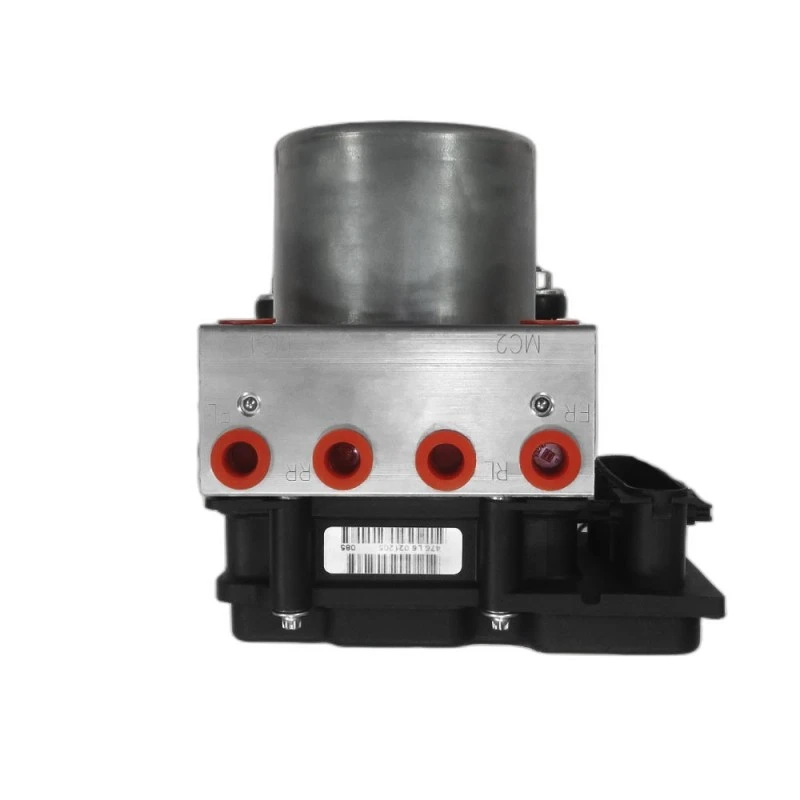
The ABS pump is the heart of the PSM system – it's what actually applies the brakes when the computer says to. These units have a motor inside that can wear out or burn up, especially if it's been worked hard or if the brake fluid hasn't been changed regularly.
These are significant repairs that often require specialized parts. The 996/997 pump failures are so common that we keep remanufactured units in stock at our European brake repair facility.
Steering Angle Sensor Issues (15% of cases)
The PSM needs to know which way your wheels are pointed, and that's the job of the steering angle sensor. These fail less frequently than wheel sensors, but when they do, they cause all sorts of weird behavior before eventually triggering warning lights.
We had a customer with a 2014 Boxster who swore his car was "haunted" because it would randomly apply the brakes on one wheel during normal driving. Turned out the steering angle sensor was intermittently sending incorrect data to the PSM computer. This is exactly the kind of issue our diagnostic specialists are trained to identify.
Control Module Failures (10% of cases)
The PSM control module is the computer that makes all the decisions. While not as common as sensor or pump failures, when these go bad, it's a major headache. Sometimes it's due to water damage, sometimes electrical problems elsewhere in the car, and sometimes they just die from old age.
These are complex repairs requiring specialized programming and calibration. On newer Porsches (2014+), these modules are often integrated with other systems, making replacement even more complex.
Wiring Issues (10% of cases)
This is my personal nemesis. Chasing down intermittent wiring problems in a complex German car can be… challenging. Broken wires, corroded connectors, pinched harnesses – they can all cause PSM failures that come and go unpredictably.
The engine wiring harness on the 997 is particularly problematic – I've spent full days tracing wiring problems only to find a tiny break in a wire that was rubbing against a bracket.
Other Issues (5% of cases)
Sometimes the PSM warning comes on because of problems elsewhere in the car – battery voltage issues, alternator problems, or even just a wonky wheel alignment or tire pressure difference. These are usually the easier fixes, thankfully.
Diagnosing Porsche PSM Problems:
Why You (Probably) Can't DIY This One
Here's where I need to burst some bubbles. While there are plenty of Porsche repairs that an enthusiast with decent tools can tackle, PSM diagnosis usually isn't one of them..That said, there are a few things you can check before heading to a shop:
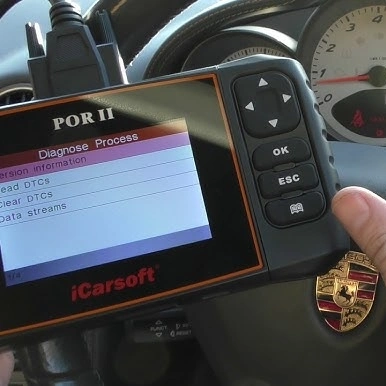
- First, you need a proper Porsche-specific scan tool to read the actual fault codes. Generic OBD2 scanners might tell you "ABS Fault" but won't give you the specific sensor or component that's failing. The good diagnostic tools cost thousands of dollars (our shop uses PIWIS, which is what the dealers use). That's why our check engine light diagnostic service is so valuable for Porsche owners.
- Second, PSM diagnoses often require understanding the interactions between multiple systems. A failure in one area can trigger fault codes in several different control modules. Interpreting these correctly takes experience.
- Third, many PSM repairs require calibration or programming after component replacement. This isn't something you can do in your garage without specialized equipment.
- Verify your battery is in good condition (low voltage can cause weird electrical gremlins)
- Make sure all four tires are the same size, brand, and model, with similar tread wear
- Check for obvious damage to wheel speed sensors or their wiring (visible near each wheel hub)
- Check if your brake fluid level is correct
Schedule Porsche service
SchedulePSM Reliability by Porsche Model
Not all Porsches are created equal when it comes to PSM reliability. Based on what I've seen roll through our shop doors:
Porsche Models Prone to PSM Failures
- 996/997 911s (1999-2008): Notorious for ABS pump failures. If you own one and haven't had this problem yet, you probably will. Sorry. Check out our detailed guide on Porsche repair near Dallas for more info.
- First-gen Cayenne (2003-2010): Wheel speed sensor issues for days, plus wiring problems galore.
- First-gen Panamera (2010-2016): ABS pump and control module issues more common than they should be.
Moderately Reliable PSM Systems
- 987 Boxster/Cayman (2005-2012): Fairly reliable PSM systems, but still prone to occasional sensor failures.
- 991.1 911s (2012-2016): Much improved over previous generations, but not perfect.
- Macan (all years): Surprisingly decent reliability, with most issues coming from wheel sensors.
Most Reliable Porsche PSM Systems
- 991.2 911s (2017-2019): Solid PSM reliability, very few major issues.
- 992 911s (2020+): Still too new to have many problems, and the system is much improved.
- 718 Boxster/Cayman (2016+): Decent reliability, though we're starting to see some sensor issues in higher-mileage examples.
How to Prevent Porsche PSM Failures
While some PSM problems are just the result of components reaching the end of their lifespan, there are definitely things you can do to reduce the risk:
Porsche PSM Failure & Preventative Measures
Regular Brake Fluid Changes for Porsche
Change your brake fluid every 2 years without fail. Old brake fluid absorbs moisture, which can corrode components in the ABS system. I've seen direct correlations between owners who skip brake fluid changes and those who end up with pump failures. Our European brake service includes high-quality fluid designed specifically for these systems.
Porsche Battery Maintenance for PSM Systems
Keep your battery in good condition. Voltage fluctuations can damage electronic controllers. If you don't drive the car often, use a quality battery tender. We offer comprehensive battery service to keep your Porsche's electrical system in perfect condition.
Protecting Porsche Wheel Speed Sensors
Wash under your car occasionally, especially if you live somewhere with road salt or drive on dirt roads. This helps prevent corrosion of the wheel speed sensors and their wiring.
Address your Porsche's Warning Lights Early
Address warning lights promptly. Intermittent PSM lights often precede complete failures. Catching problems early is usually less expensive.
Should I Drive With PSM On or Off?
You should drive with PSM on for daily driving and in adverse weather conditions for maximum safety. While skilled drivers might deactivate PSM for track driving or to experience more dynamic handling characteristics, the system automatically reactivates if it detects emergency braking. Even during spirited driving, PSM provides a crucial safety net that can prevent accidents without significantly limiting performance in modern Porsches.
The Bottom Line on PSM Failures
If your Porsche's PSM light comes on, don't immediately assume the worst. Many times, it's just a wheel speed sensor or a simple wiring issue. And remember – even with a PSM failure, your car is still drivable in most cases. The regular brakes still work (though without ABS), and the engine still runs (though maybe in a reduced power mode). The biggest risk is that you no longer have the safety net of stability control, so drive accordingly until you get it fixed. No aggressive cornering or high-speed antics, please. And whatever you do, don't ignore it. I've seen too many customers turn a minor wheel sensor problem into a major system replacement by continuing to drive with warning lights for months.
Your Porsche is an incredible machine that deserves proper care. Yes, PSM problems are annoying and sometimes costly, but they're also just part of the ownership experience. Like I tell my customers: "If you wanted cheap and problem-free, you should've bought a Camry. But then you wouldn't be grinning every time you press the accelerator, would you?"
Expert Porsche Repair Dallas & Fort Worth
Our Porsche repair Dallas specialists have the PIWIS diagnostic equipment and expertise to properly diagnose and repair PSM issues. Serving Dallas, Fort Worth, Plano, and all of DFW. We save you 30-40% compared to dealership prices. Looking for Porsche repair Fort Worth? We're just 25 minutes away.
Schedule Porsche PSM Diagnosis →